Secure Generative AI Adoption: Protect Your Data, Customers and Reputation
A governance and security blueprint for rolling out ChatGPT-style tools, copilots and custom AI across the business.
- Published
- Reading time
- 12 minutes
- Prepared by
- NPLUS Global Research
01 · Executive summary
Key findings
- 1Your staff are already using generative AI. Banning it pushes usage into personal accounts you cannot see.
- 2The biggest early risk is not rogue AI, it is employees pasting confidential data into unapproved tools.
- 3An approved tool list, a one-page policy and data controls remove most of the risk in weeks.
- 4Treat AI vendors like any critical supplier: review data use, retention, training and security certifications.
02
The current state: shadow AI
Employees adopt AI because it saves them time. When the company has no approved option, they use personal accounts and free tools, and confidential data goes with them. Samsung learned this in 2023 when engineers pasted source code into a public chatbot; the company responded by restricting generative AI tools.
The objective is to make the approved, secure path the easiest one for employees to use.
03
Principal risks
Data leakage
Customer data, financials, source code and contracts pasted into tools that may store or train on them.
Wrong answers with real consequences
AI output used in customer communication, legal or financial decisions without review. Air Canada was held liable for its chatbot's incorrect policy answer in 2024.
Intellectual property and licensing
Unclear ownership of AI-generated content and code, and the risk of reproducing protected material.
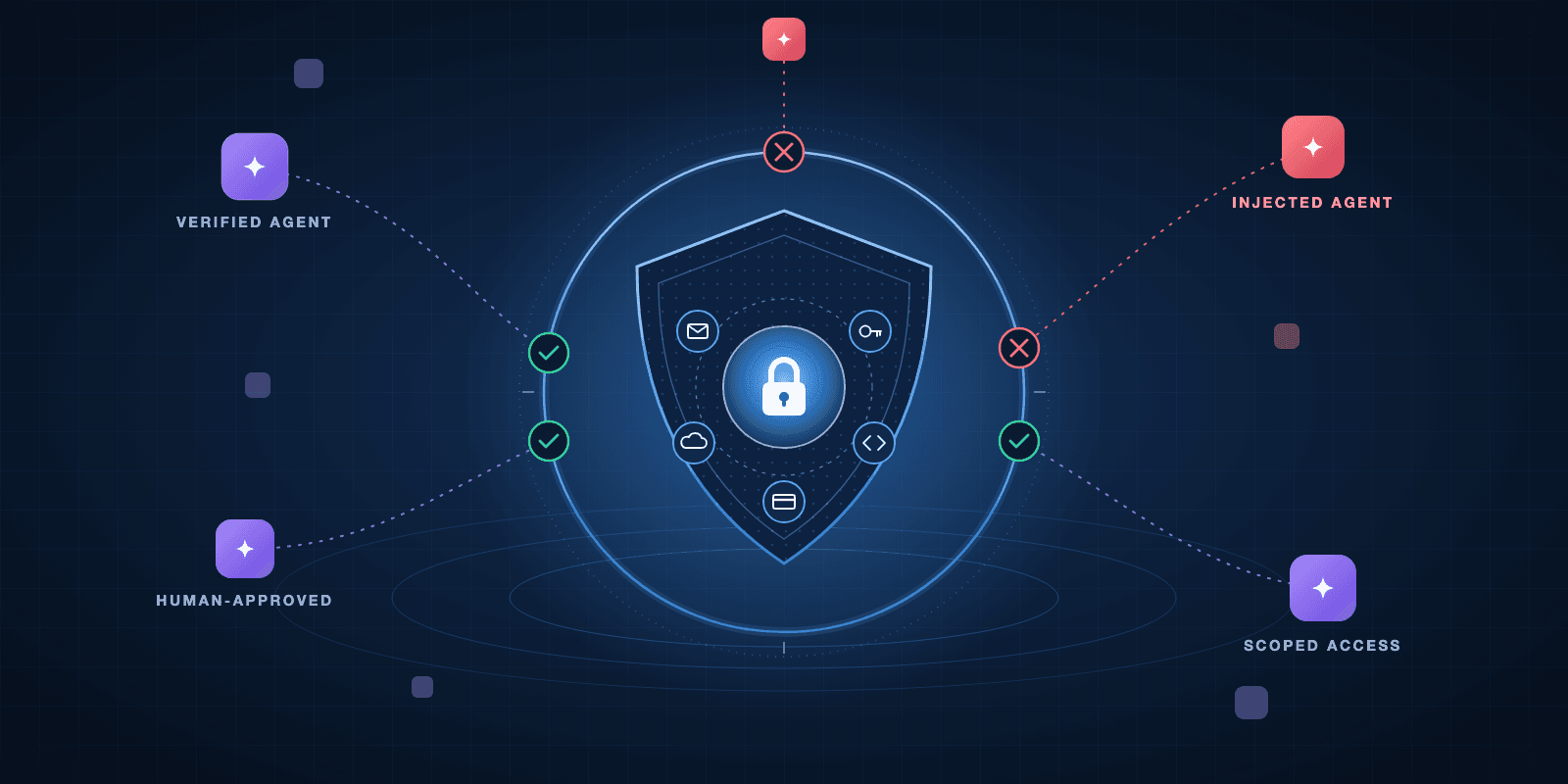
Prompt injection and manipulation
Tools connected to email, files and the web can be steered by hidden instructions in that content.
Compliance exposure
Personal and health data processed in ways that conflict with GDPR, HIPAA, India's DPDP Act or client contracts.
04
Recommended governance framework
1. Approve the tools
Choose enterprise versions with data-protection terms (no training on your data, defined retention, SSO). Publish the list.
2. Write a one-page policy
What data may and may not go into AI, when human review is required, and how to label AI-generated content.
3. Classify the data
Mark public, internal, confidential and regulated data, and block the top tiers from unapproved tools with DLP controls.
4. Connect identity
Single sign-on and role-based access for every AI tool, so access ends when people leave.
5. Review vendors
Check SOC 2 or ISO 27001 reports, data location, subprocessors, retention and model-training terms.
6. Train people
Short, practical training on good prompts, data rules and spotting AI mistakes, refreshed every year.
7. Monitor and improve
Track usage, incidents and value. Review the policy quarterly as tools and regulations change.
05
Align with recognized frameworks
Customers, auditors and regulators increasingly ask how you govern AI. The NIST AI Risk Management Framework gives a practical structure (govern, map, measure, manage). ISO/IEC 42001 provides a certifiable AI management system. The OWASP Top 10 for LLM Applications covers the technical risks. Where you serve European customers, map your use cases against the EU AI Act risk categories.
06 · Readiness checklist
Where does your organization stand?
- An approved list of enterprise AI tools with data-protection terms
- A one-page AI acceptable-use policy everyone has read
- Confidential and regulated data blocked from unapproved tools
- SSO and role-based access on every AI tool
- Security review completed for every AI vendor
- Annual AI training and a quarterly policy review
Fewer than four checked? NPLUS Global can run a short assessment and give you a prioritized plan.
07
References
- NIST, Artificial Intelligence Risk Management Framework (AI RMF 1.0), January 2023
- ISO/IEC 42001:2023, Artificial intelligence management system
- OWASP Top 10 for Large Language Model Applications, 2025 edition
- Regulation (EU) 2024/1689 (EU Artificial Intelligence Act)
- Moffatt v. Air Canada, 2024 BCCRT 149, February 2024
- Press coverage of Samsung's restriction of generative AI tools, May 2023
About NPLUS Global
NPLUS Global is a technology services company providing cybersecurity and compliance, AI agents and automation, and MarTech services to businesses in the United States and India. Contact info@nplusglobal.com or +1 (201) 279-0779.
This paper is provided for general information and does not constitute legal advice. Incident details are drawn from the public sources listed above. © 2026 NPLUS Global.